Every job below is one we do ourselves across Corona.
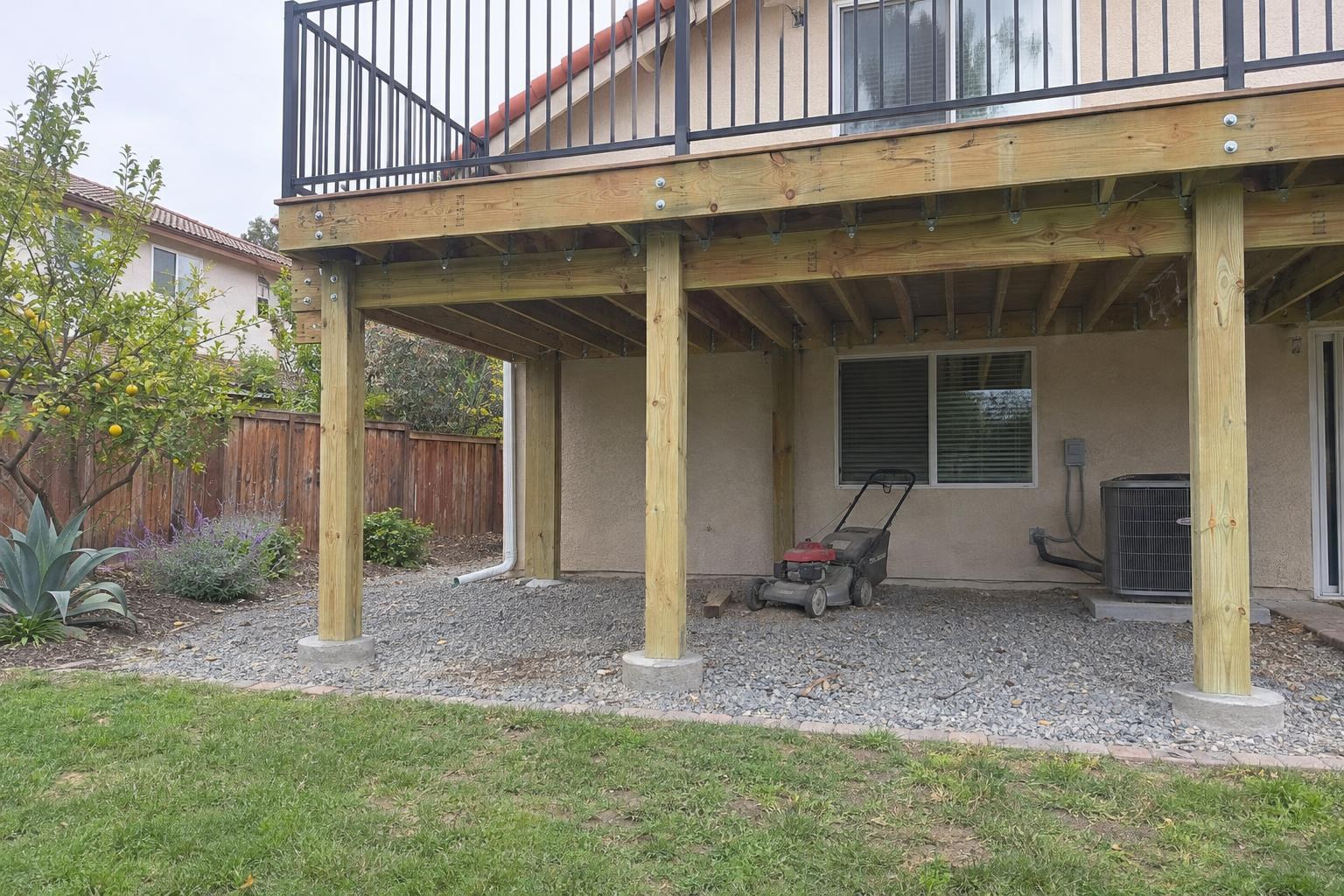
We build new decks from the footings up, sizing joists and beams to span tables rather than guessing at lumber size. Ledger boards get flashed and bolted to the rim joist correctly, since that connection is where most deck failures start. Pressure-treated pine, cedar, redwood or composite decking go on top depending on budget and how much upkeep you want to deal with later.
Soft boards, wobbly rails, and posts that have started to lean all get fixed without necessarily tearing out the whole deck. We check the framing underneath first, since a loose rail is often a symptom of a rotted post, not a problem with the rail itself. Rusted joist hangers and fasteners get swapped for galvanized or stainless hardware while we're in there.
Corona sun turns untreated wood gray and brittle within a couple of summers, especially on decks that face south or west with no shade. We pressure wash, let the wood dry fully, then apply a stain and sealer rated for the UV and heat out here. Doing this every two to three years keeps the boards from checking and splitting.
Multi-level decks, built-in benches, and layouts that match the house's rooflines and trim all get planned before a single footing goes in. We work from how you actually use the yard, grilling, seating, a hot tub, rather than a generic rectangle. Drawings get sketched out up front so you know what you're approving before it's built.
When the framing underneath is still solid but the decking boards are cupped, splintery or just worn out, we strip the old boards and install new ones on the existing structure. This costs less than a full rebuild and takes a fraction of the time. It's also a common point to switch from wood to composite without touching the framing at all.
Composite boards from brands like Trex and TimberTech skip the sanding, staining and splinters that come with a wood deck. Hidden fastener systems keep the surface free of screw heads, which also helps with drainage between boards. Composite does get hot underfoot in direct summer sun, which is worth knowing before you commit to a dark color.
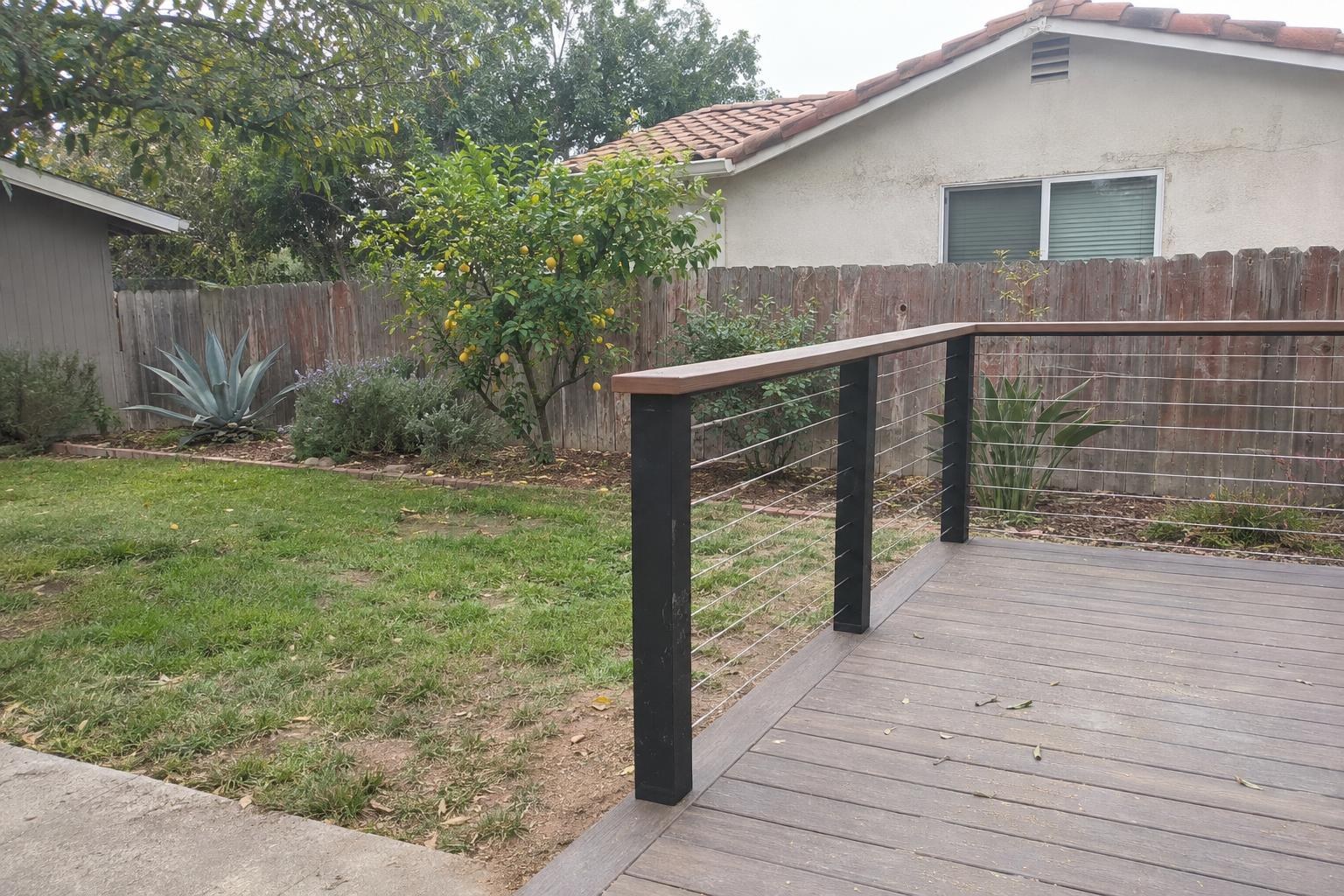
Railings get built to code height, typically 36 to 42 inches depending on deck height, with balusters spaced so a 4 inch sphere can't pass through. Wobbly rails usually trace back to a loose post connection rather than the rail cap itself. Wood, metal, and cable rail systems are all options depending on the look you're after.
Joist hangers rust, ledger boards rot where they meet the house, and footings shift in our clay soil if they were poured too shallow. We dig new footings below the point where the soil moves seasonally and resize beams if the original framing was undersized for the span. This is the work that decides whether a deck is safe to stand on, even if it doesn't show from the surface.
Old decks get torn out board by board, with nails and screws pulled or cut flush so nothing gets left in the dirt. Lumber and debris get hauled off the same day in most cases. This usually happens right before a new deck goes in, but it's also booked on its own when a deck just needs to come down.
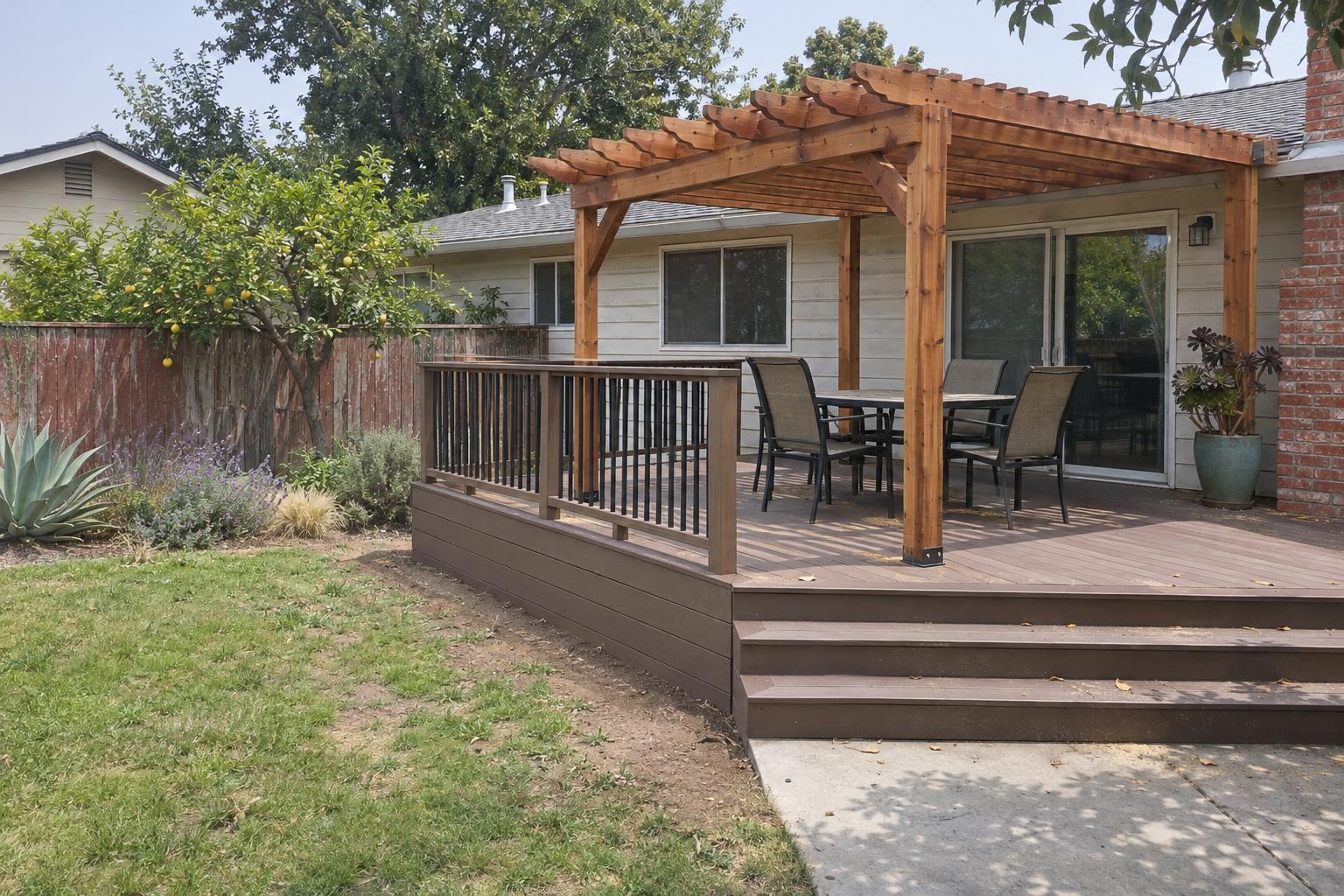
A pergola or solid cover over a deck cuts down on direct sun, which matters on a deck that faces west and gets hit all afternoon. Posts tie into the existing deck framing or get their own footings if the structure underneath wasn't built to carry the extra load. Lattice, solid roof panels and retractable fabric covers are all options depending on how much shade you actually want.
Four steps, and no surprises in any of them.
You tell us what you want doing, we look at what is actually there, and we ask the awkward questions early.
In writing, itemised, free. If something might add cost later we flag it now rather than at the end.
Same crew throughout. We cover your floors, keep the dust down and tidy up before we leave each day.
You point out anything you are not happy with and we fix it before the invoice, not after.
Deck crews working across the Inland Empire, not just Corona.
Questions that come up once a project actually gets going.
Describe the problem and we will tell you what it probably is. No obligation.